

Every Wednesday afternoon, I get together with a group of my favorite people. They are not hiking buddies; they are writing buddies. A couple of years ago, they invited me to join their critique sessions. I was like a stray puppy, shy, in need of a little encouragement, gentle admiration, and an occasional correction. They were like a pack of experienced sled dogs, leading the way.
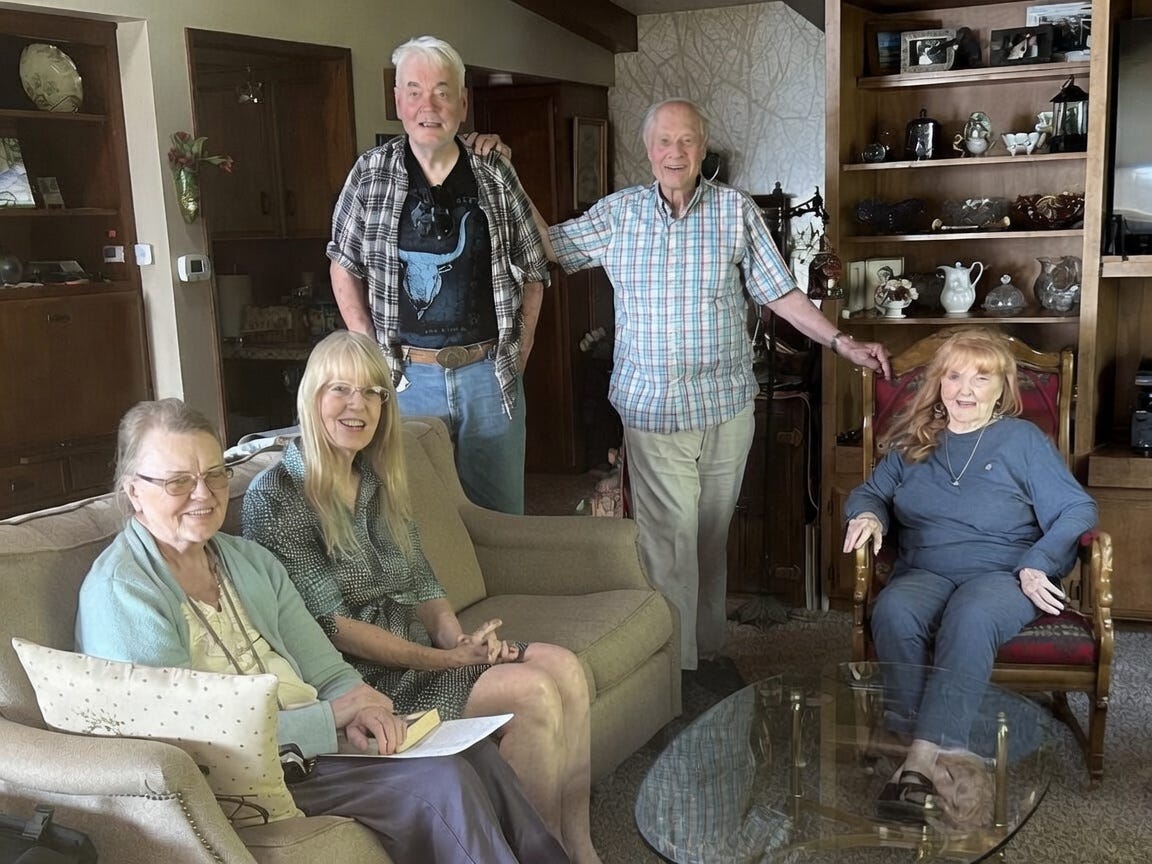
This is not just my way of saying they are practiced writers; it’s also my (admittedly sloppy) acknowledgment that many of them have a few more decades of wisdom and miles on me.
Recently, while we were discussing my latest hiking posts, one pack member, a playwright, asked, “How can seniors get in shape for walking?”
It was a good question, one I was a bit uncomfortable answering because the level of activity appropriate for one person, regardless of age, might differ for another.
But as soon as she asked the question, the room filled with murmurs of interest. Some were genuine, others a bit sarcastic.
“Yes, start a hiking club for those with hip implants and replacement knees,” one joked.
All agreed, however, it was a good topic for HikeNorthernIdaho50at50.com. After some research (and a lot of nodding from the group), here are practical, low-pressure ways to get started.
Remember: It’s always smart to consult your doctor before starting any new workout routine.
1. Locate a flat, safe place to walk.
Download the free AllTrails app. Type in your desired location and utilize the filter options to find easy, low-elevation, short walks in the area. It even has accessibility options such as “Wheelchair friendly” and “Paved.” Want to bring your pooch? Select “Dog Friendly.”
Alternatively, stay indoors. Walk around big-box stores, or see if the local fitness center has an indoor track.
2. Start with short walks and build up to longer treks.
For folks over 65, an average of 30 minutes, five days a week, is recommended. Not ready for that? No problem. Do what you can. Walk around the living room while you watch TV or chat on the phone. You’ll be able to walk farther and longer with practice.
3. Use the “Talk Test.”
This can help you determine how fast to walk. You should be able to talk in complete sentences, but singing should be difficult.
4. Balance Matters – Use Support
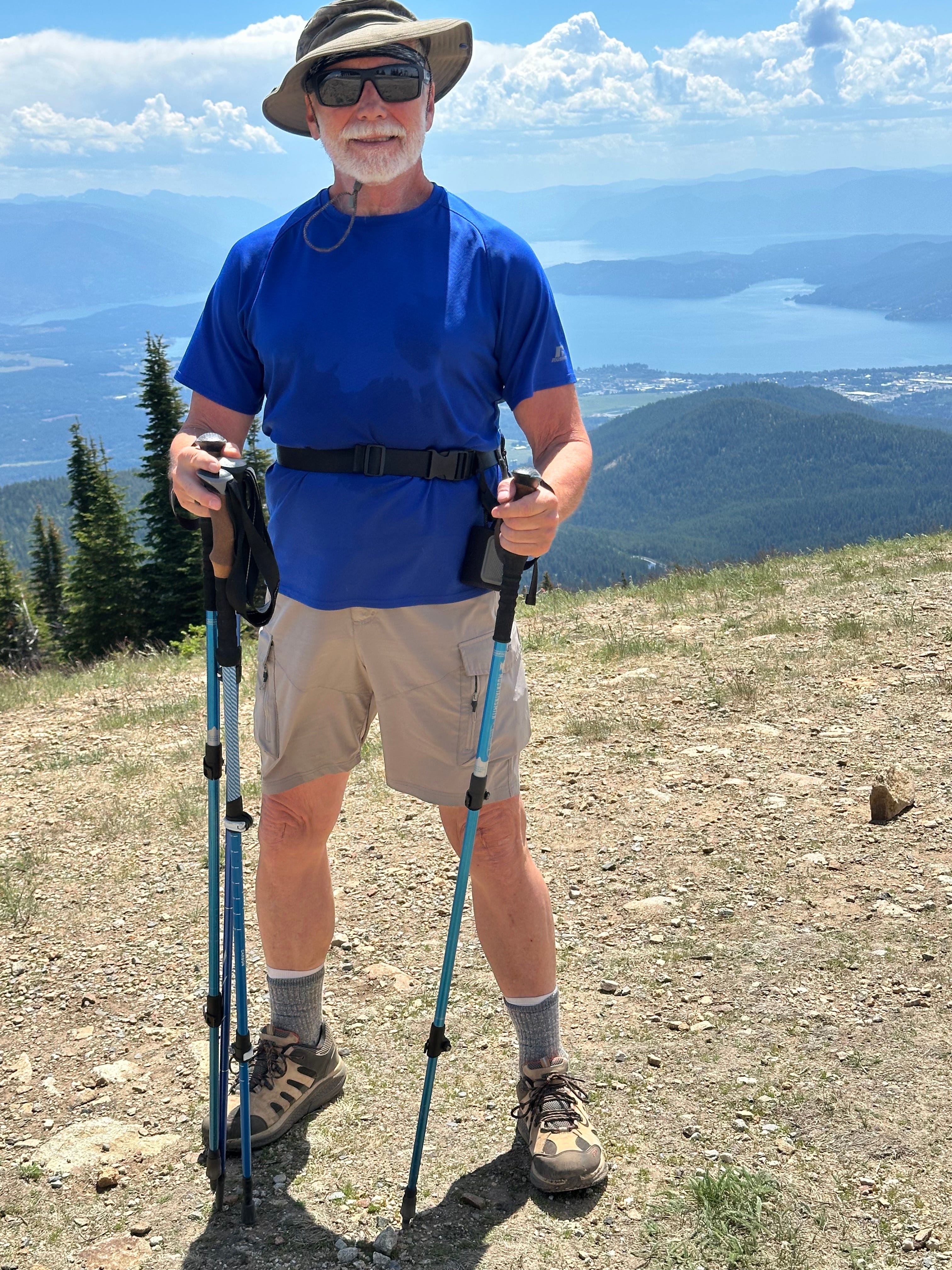
Wear supportive, comfortable shoes. Walkers and canes are great for those who need them. Trekking poles are helpful and help engage the upper body and core.
5. Be Prepared
Wear clothes suitable for the weather. Drink water.
6. Walk with a friend
Life is meant to be shared, as is a pretty hike. Plus, if something goes awry, it’s good to have someone around to help.
To make new walking friends, check out walkwithadoc.org. It’s a global nonprofit that organizes group walks where everyone gets outside to enjoy the sun while discussing a health topic. After a quick search of their site, I found a walk near me at Travers Park (2100 Pine Street) in Sandpoint, Idaho every Thursday at 1:00 PM PST.
7. Celebrate All Movement
The more we move, the longer we live. Still, the vast majority of Americans aren’t exercising enough. So, every time you purposefully take an extra step, pat yourself on the back – and then take another!
Who knows? Now that I’ve got solid answers for my writing group on how to safely get up and go, maybe we’ll start walking together. Spot a diverse group on a path debating whether to italicize thoughts in prose, with a tall blond woman quoting “Gone With the Wind.” It’s us.
Whether you’re easing into your first neighborhood loop or training for a gentle trail, I’d love to hear about your walks in the comments. Share a favorite safe spot in Northern Idaho, or tag a friend who might enjoy these tips.
Subscribe for more hike guides, fitness ideas for real bodies, and stories from the 50 at 50 journey. Let’s keep moving—together.
Want to know more about exercise guidelines? Check out these helpful references:
American Family Physician: Exercise Prescriptions in Older Adults
American Heart Association Recommendations for Physical Activity in Adults and Kids
Center for Disease Control: Older Adult Activity: An Overview
Department of Health and Human Services: Physical Activity Guidelines for Americans