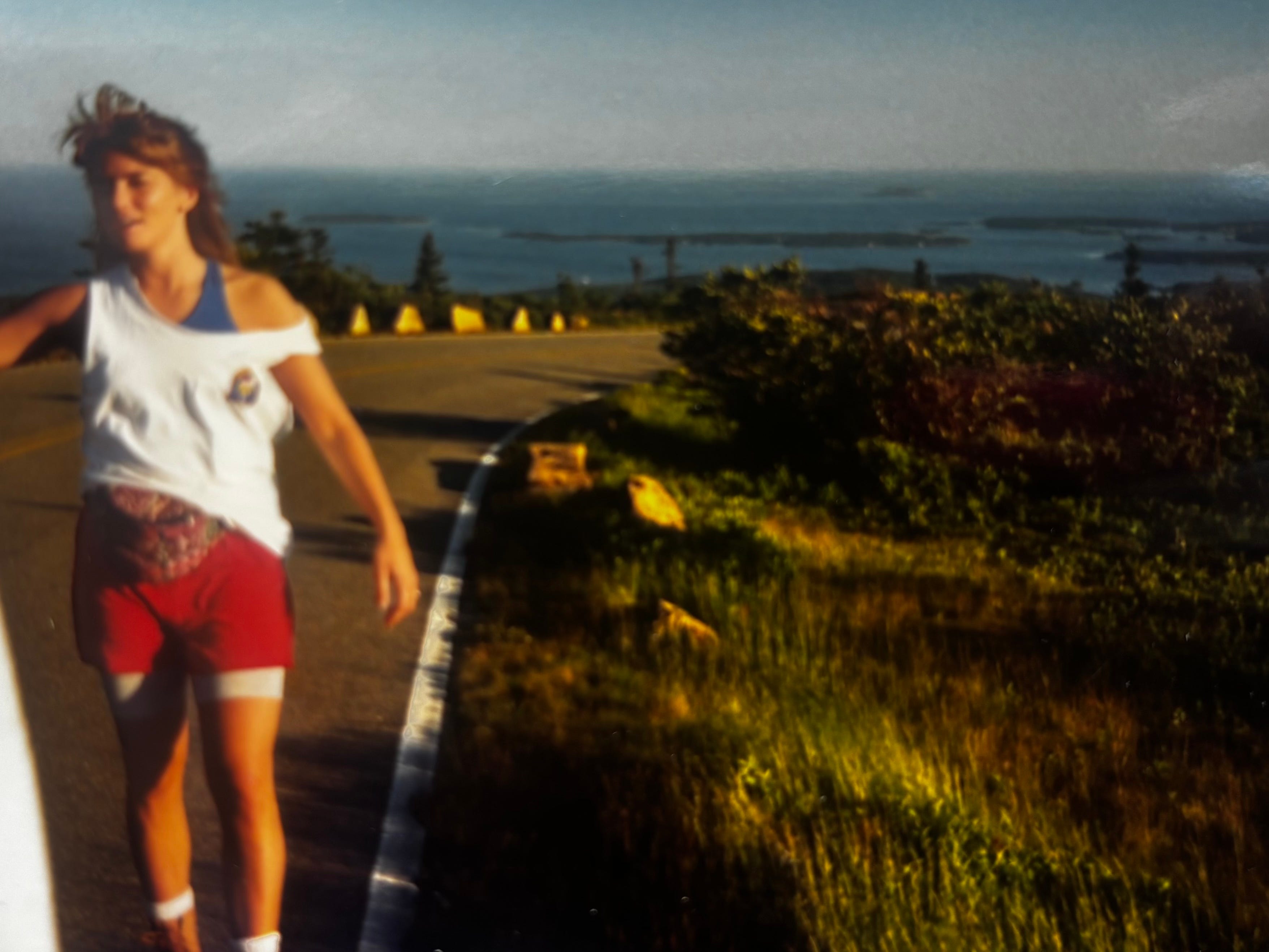
I balanced upside down, standing on my hands on top of a mountain I’d just climbed along with a few dozen of my closest high school best buddies.
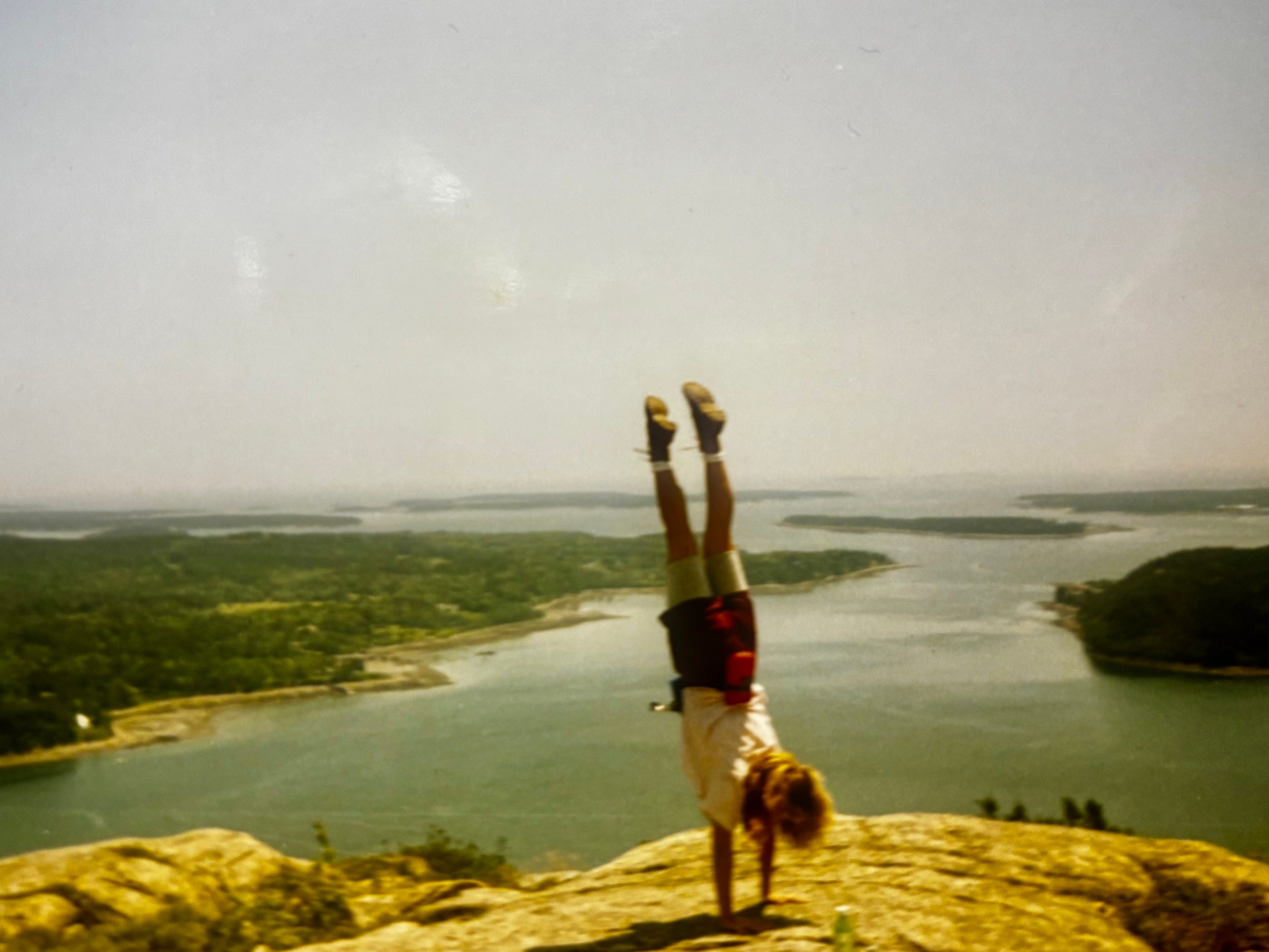
My brown Timberland-booted feet wiggled five-and-a-half feet in the air.
With every moment, the skin on my face grew a few shades closer to hot pink.
My sixteen-year-old legs teetered. To onlookers, my handstand didn’t look perfect. My knees were bent. One foot was pointed a bit more askew than the other.
Still, I felt triumphant, doing my first-ever handstand on top of a mountain.
I was not a gymnast, nor had I ever done a handstand before. I couldn’t hold the pose for more than a few milliseconds, but that proved long enough for a buddy on Mount Ampersand to snap my picture.
Now, thirty-five years later, I still have the picture of that moment. I kept it, pressed for the first twenty years in a photo album from my trip to Jesus camp at Saranac Lake, New York. For the next fifteen years, the picture lay, jam-packed in a file cabinet filled with every picture I’d ever taken, prior to the moment the digital camera took over.
In 1981, the year I turned ten, I’d asked my mom and step-dad for a camera. On Christmas morning I unwrapped a small black plastic Kodak point-and-shoot. It took fuzzy, grainy photos, but to me they looked great.
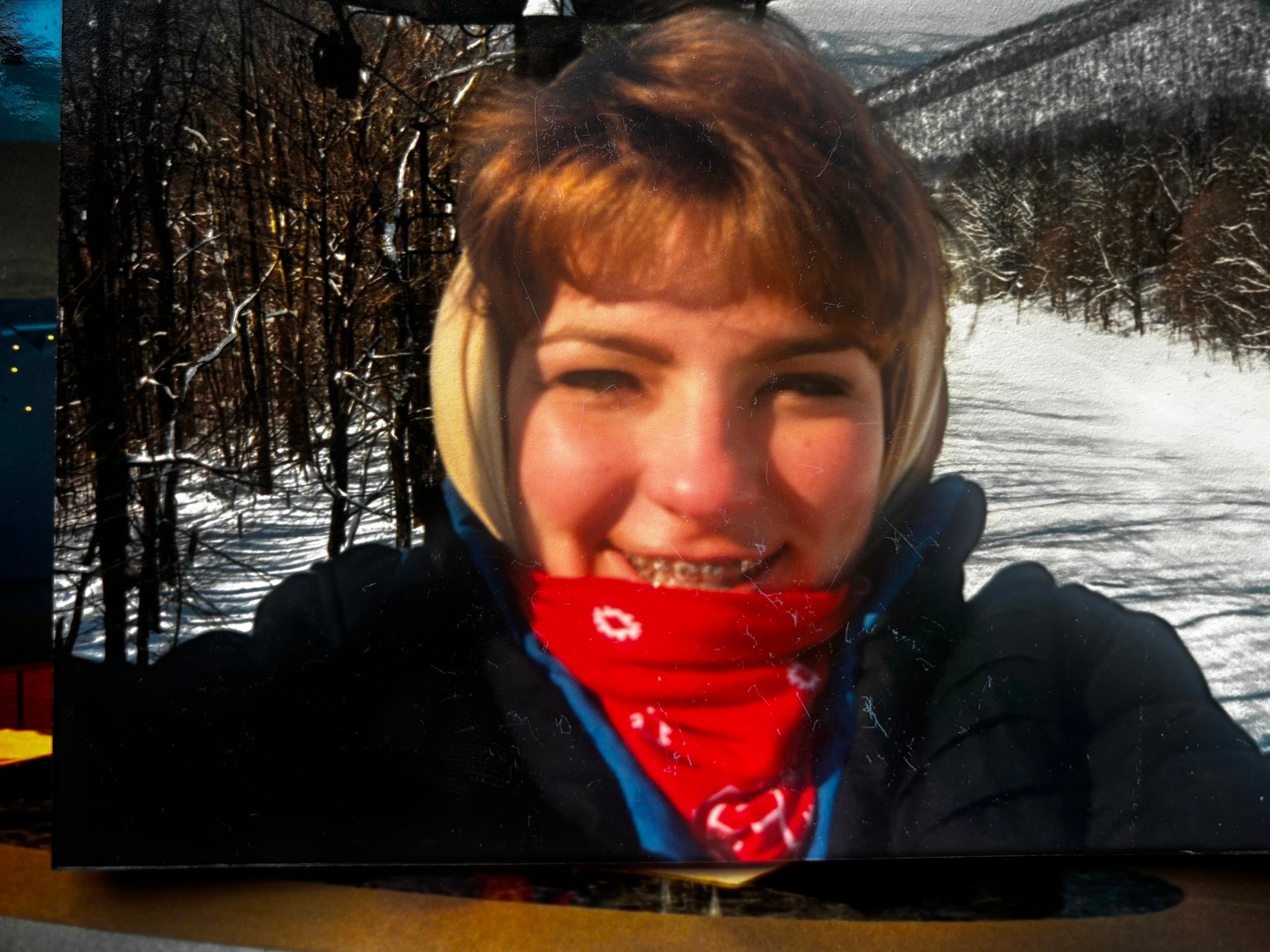
I kept that camera in my purse everywhere I went.
Even as a child, I’d had this core-level understanding of the hummingbird-fastness of life.
I wanted to record the high points and the mundane alike. That way, when I was old, I could look back and remember it all. (I might have watched My Life a few times too many. It was a favorite movie of mine, starring Michael Keeton as a terminally ill father who videos himself, so his newborn son would one day be able to know him. )
My Ty Pennington-level attention deficit disorder was still decades away from being formally diagnosed, yet everyone around me knew how forgetful I was, leaving random stuff behind everywhere I went. Perhaps, deep down, I knew, without pictures, I might forget it all. Desperately, I needed a way to remember.
As I entered adulthood, I could not wait to get busy livin.’ Visit the friend, the city, the mountain range. Go on the mad-cap adventure with best friends. See the sights and the views. And of course, record it all.
Life passes lightning-fast.
Now, when I think about Mount Ampersand, New York, and the picture of me, doing a handstand on its igneous rocky top, I can feel as blue-gray inside as the water of Long Lake, off in the distance behind me.
I didn’t hike as much as I planned to.
I couldn’t.
And I don’t hike now because I still can’t.
Hell, at the moment, I can barely get through a grocery store without having to use one of the courtesy scooters plugged in beside the real shopping carts.
I never thought life would end up like this… with me intermittently and partially disabled, due to constant pain and legs that were mauled years ago in a surgery they promised would give me my life back.
Life doesn’t turn out as perfect as we hope.
I still, literally, thank God that I’m mobile enough to get to the potty without my husband’s help. I’m thankful I have a husband who didn’t leave the second our life turned squirrelly… as many spouses do.
Through my teens and twenties, my friends often marveled at how active I was. I walked long distances without pain, snow-skied, cross-country-skied, water-skied, played tennis, hiked, and ran for distance, for fun, and to keep my internal stress from eating me alive. Moving kept me sane and happy.
Then, after my twins and our bonus third child were born, chronic hip pain began to nag.
A toxic set of hip replacement devices I got when I was thirty-nine sealed my fate, leaving me in worse pain than ever, less able to do what I wanted, and destined to have a life punctuated by surgery after surgery for a full decade and a half.
Today I have no clue what life holds. Frankly, most days, I’m concerned.
I’m 53 years old and have numerous surgeons currently telling me one of my hip replacement devices is now infected. They say all my hardware needs to be taken out immediately. That means two more surgeries over the next three to twenty-four months, depending on whether the infection goes away quickly or not.
As one might imagine, I’m desperate to avoid more surgery. Everyone I know who’s had an infected implant never recovers, gets out of pain, or can walk normally after what the surgeons do.
As mysterious lumps on the outside of my right hip and inches below my glutes grow bigger, surgery seems inevitable. I should face it; I may never walk normally again.
Since my medical fiasco started, back in 2010, I always hoped I’d get better. For the first few years, my hope seemed reasonable. Now it seems quaint if not naive.
After my first bilateral joint replacement, I made a little progress, but never did as well as most patients do. I’d do OK for a month or two, and then a new complication would crop up, disabling me for years.
Rinse, wash, repeat.
Everybody has something, I told myself. Pain and disability are just my crosses to bear.
Sometimes I find myself upset about how long it’s been since I could do what everyone around me was doing… climbing mountains, riding bikes, hiking with kids and spouses. Vacationing. Cleaning the house. Doing things that require walking.
Last year my husband hoped to take me on a weekend get-away to celebrate our twenty-sixth anniversary. Without telling me he bought plane tickets to San Diego. He’d overheard me, saying I’d always wanted to see a whale. When he surprised me, telling me we were going whale-watching, all I could think about was the last time I’d had to walk through an airport and how painful it had been.
I’m gonna feel like I’m walking on hot coals.
When I got up the nerve to tell him I was dreading the trip and asked him to cancel, he said, “But airports offer free golf carts! They’ll drive us from gate to gate!”
Riding a golf cart, which I’d done plenty of times, made me feel decrepit, pathetic and sad.
At least at home, I got to pretend I wasn’t disabled.
Obviously, I’m still wrestling. My mind refuses to accept my body’s reality. As crazy as it may sound after fifteen years, I still hope to get better. I’d like to hike again.
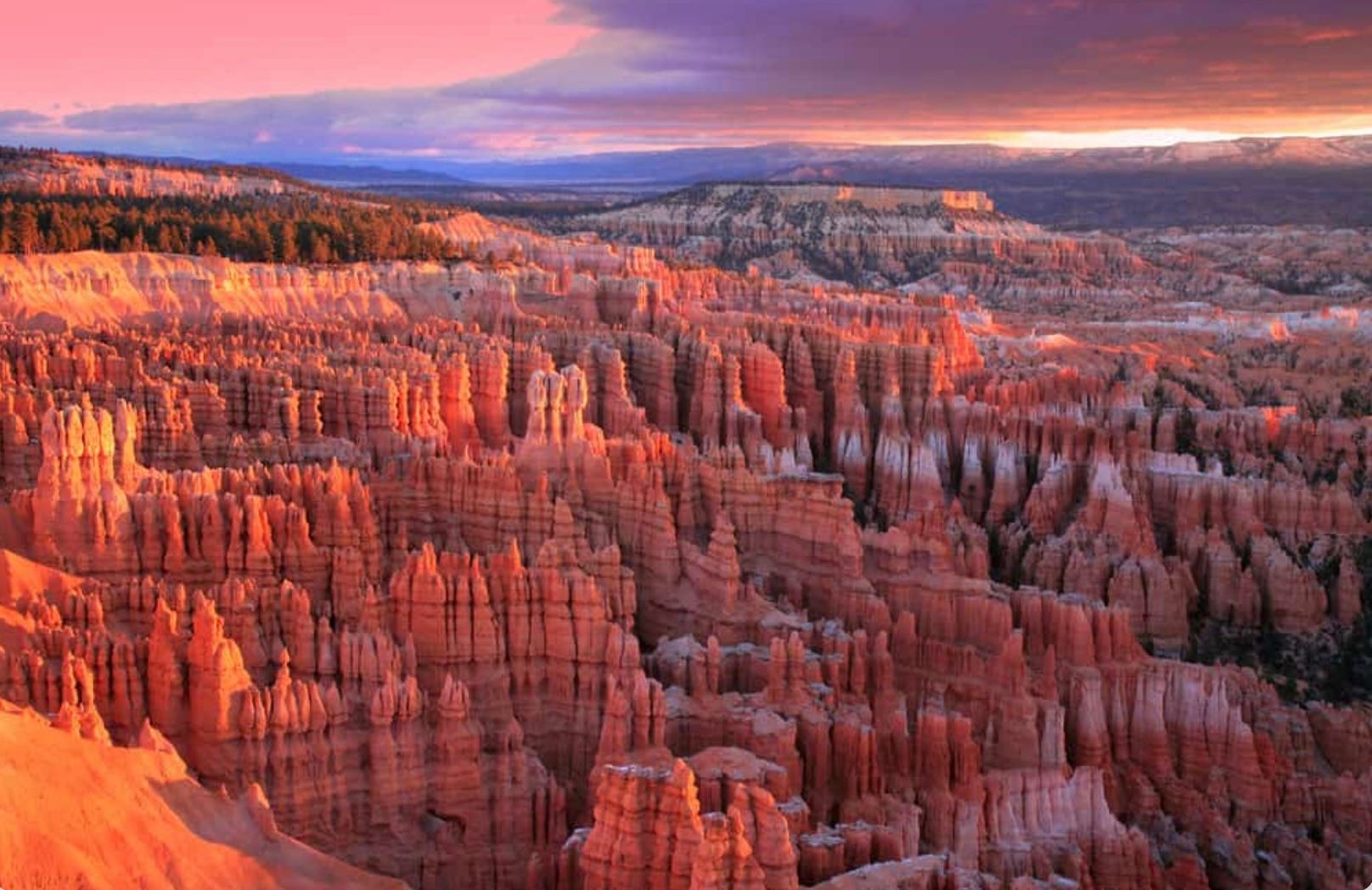
“I want to see the hoodoos,” I told my husband one night after reading about Utah’s Bryce Canyon National Park.
“What are hoodoos?” He asked.
“They’re these really cool pillars of rock. They look like spires!” I said. “They’re made by erosion. Water seeps into cracks, and freezes and thaws over and over again, breaking off bits of rock until there are just skinny columns.”
My husband began pecking away on his phone.
“Mmmm,” he said. “This website says you can’t see much by car. You have to hike to see the cool stuff.”
We looked up parks marked ‘handicap-friendly’ and ‘car-accessible,’ phrases that depressed me.
Everyone ends up hoodood in one way or another.
“I don’t wanna travel anymore,” I said.
My husband quietly canceled our whale-watching trip.
He took me instead to a Dave Matthews Band concert coming to our town. I’d been a passionate fan of the band when my husband and I first met.
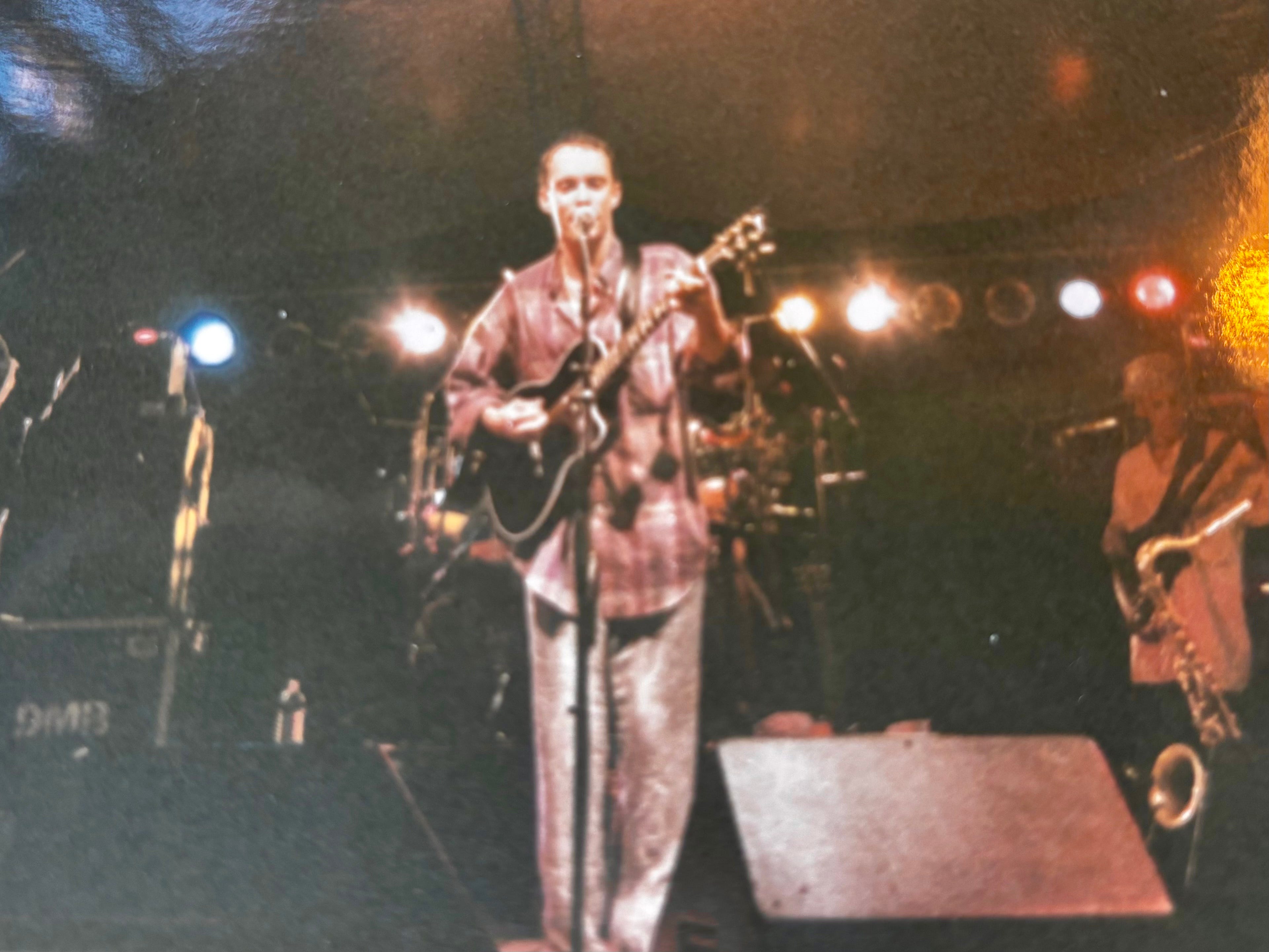
On the way to our seats the night of the show, my thigh muscles began to cramp. I had to slow down and then stop walking. Then I needed to sit, but there were no chairs in sight.
I slid down the wall next to the bathrooms and plopped my butt onto the tile floor, next to the corridor where everybody walked.
“What are you doing?” My husband asked, frowning.
“Gimmie one sec,” I said.
He didn’t roll his eyes. It only felt as if he did.
My disability both annoys and embarrasses both of us from time to time. Though I’m thankful to still have my legs and a husband, I wish my legs would cooperate more consistently and I wish my husband would be patient when they refuse.
We fought on the way to our seats. I cried as the band sang Crash, a song that hit the charts about the time I realized I’d found the person I hoped to marry someday. I couldn’t believe how our life together had turned out. So many hopes, dashed.
When the concert ended, I went searching for more ice to put in the two canvas bags I wore, stuffed in my pants, trying to numb the pain.
Somewhere near the restrooms, we lost sight of each other.
My cellphone was dead. Assuming he’d gone ahead to get the car out of the parking garage, I sat down to wait at the bus stop where he’d let me out of the car before the show. As I waited there, he spent the next two hours, walking around the venue, asking maintenance people, police and everyone in a shirt with Security printed on the back whether they’d seen a blonde, limping lady, holding two empty ice bags.
Well after midnight, after all the fans, venue employees and police had left, I stopped looking for our car’s headlights.
I stood up from the bench and began limping downtown.
Hoping I’d not be mistaken for a mentally ill lady who lived on the street, what many think you are when your hair’s askew and you walk with a limp, I tapped on the window of a locked bar that still had employees milling around. The people looked at me and then looked away. Finally, a guy cracked the door open. I asked if I could charge my phone, and he agreed.
With my cell working again, I texted my husband, who came and got me. I worried we’d fight on the drive home, but we were both too sad to be annoyed and too tired to argue about who’d lost sight of whom.
After a morning of feeling sorry for myself, I realized I was tired of being sad.
Like love, hope and happiness are more ‘action words’ than feelings. They’re things we have to consciously invite into our lives.
There’s a half-full glass somewhere. It’s our job to find it and focus on it.
Recently I’ve stopped wallowing in grief over my poorly performing body. I no longer allow myself to think, at least never for too long, about the hiking I never got to do.
Instead, I focus on my healthy kids with strong, well-behaved legs and the husband I still have, the guy who stayed with me, paying my bills, loading and unloading our groceries, changing the oil in our kids’ cars, and picking me up beside the spot where the courtesy scooters are charged.
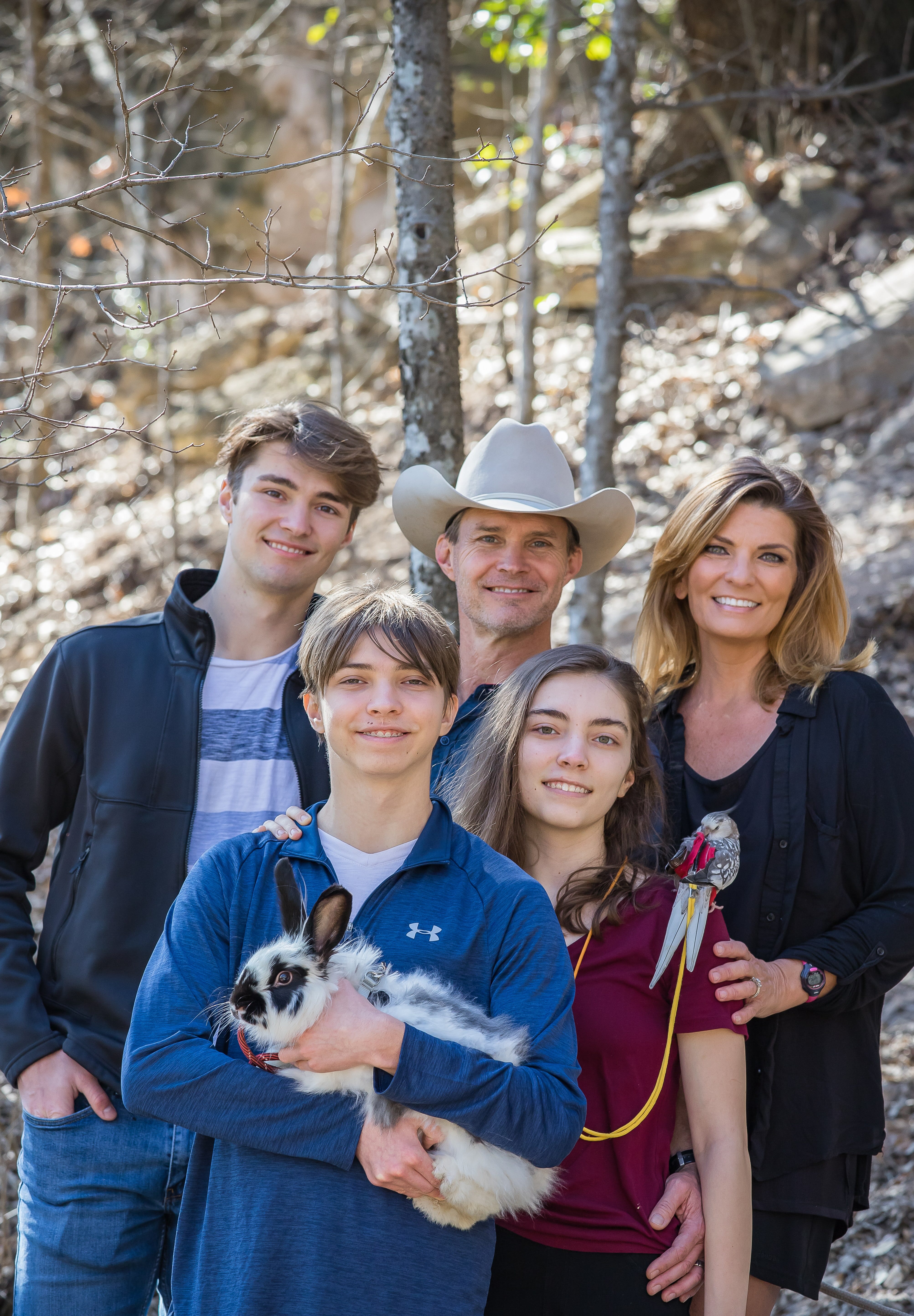
Yes, I’m unlucky to have lost a good deal of my mobility, but I’m still lucky in the ways that matter most.
I do hope my hips will heal miraculously someday.
That’s a hope I’ll never release.
Hope is a choice. Every second, we have to choose what we hold on to.
Life doesn’t have to be perfect to be good.
This Week’s Contributing Author:
Frances Scott
Instagram URL:
https://www.instagram.com/atx_fs?igsh=MThqbjljaXBhcTNm&utm_source=qr
Well done Frances. Beautiful
Writing. @francesscott
I love this!! Yay, Frances! Is she on here?