
About two years ago, my body started to change. My historically size 34B boobs began spilling out the sides of my bras. Yay! But when I pulled on my leggings, soft flesh spilled over the pinched elastic waistband. Boo.
I finally mustered the courage to step on the bathroom scale and saw 144 displayed on the small electronic screen. Until this point, throughout my adult life, my weight had ranged between 118 and 126 pounds. At 5’4” and in my late forties, 144 is still considered a healthy weight, but it felt like a very big deal.
Worse, it wasn’t just my weight. At night, in bed, my lower back started to hurt. The ache would wake me at 2:00 a.m., then again at 3:00, 3:30, and 4:00. Trying to stretch out the discomfort, I’d roll onto my side and pull one leg toward my chest, leaving the other straight. When that didn’t work, I’d flip onto my back in corpse pose, then shift to the other side and try the fetal position. No matter how I arranged my torso and limbs, the discomfort persisted.
During the day, when my husband Ken and I went for our regular 3-mile walk, my back would twinge as soon as we hit the hillside half a mile from the house. By the time we returned, my back felt frozen stiff. I had to lower myself onto the living room floor and stretch slowly before I could even reach my sneakers.
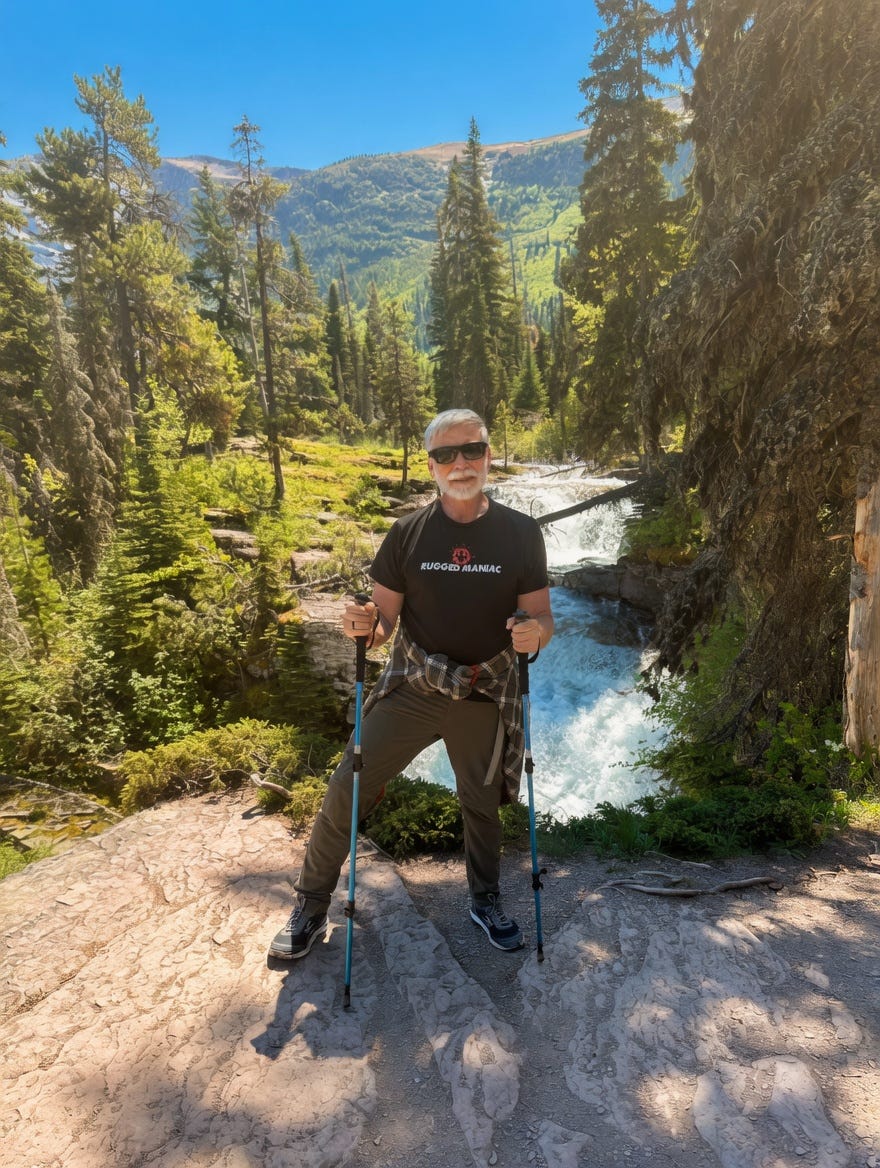
Ken had suggested hiking poles before. In the fall of 2019, while planning our first ascent of Scotchman’s Peak—an eight-mile hike in Northern Idaho near the Montana border—he recommended them.
“No thanks,” I said, preferring to keep my hands free in case I slipped on the rocky talus fields. Besides, let’s face it, occasionally a young hottie will walk down a hill with a long wooden stick in hand that they found along the trail, or a lacquered staff purchased at a gift store inside a national park, but metal trekking poles are most commonly seen among more mature hikers. I didn’t want to consider myself a member of that lot yet.
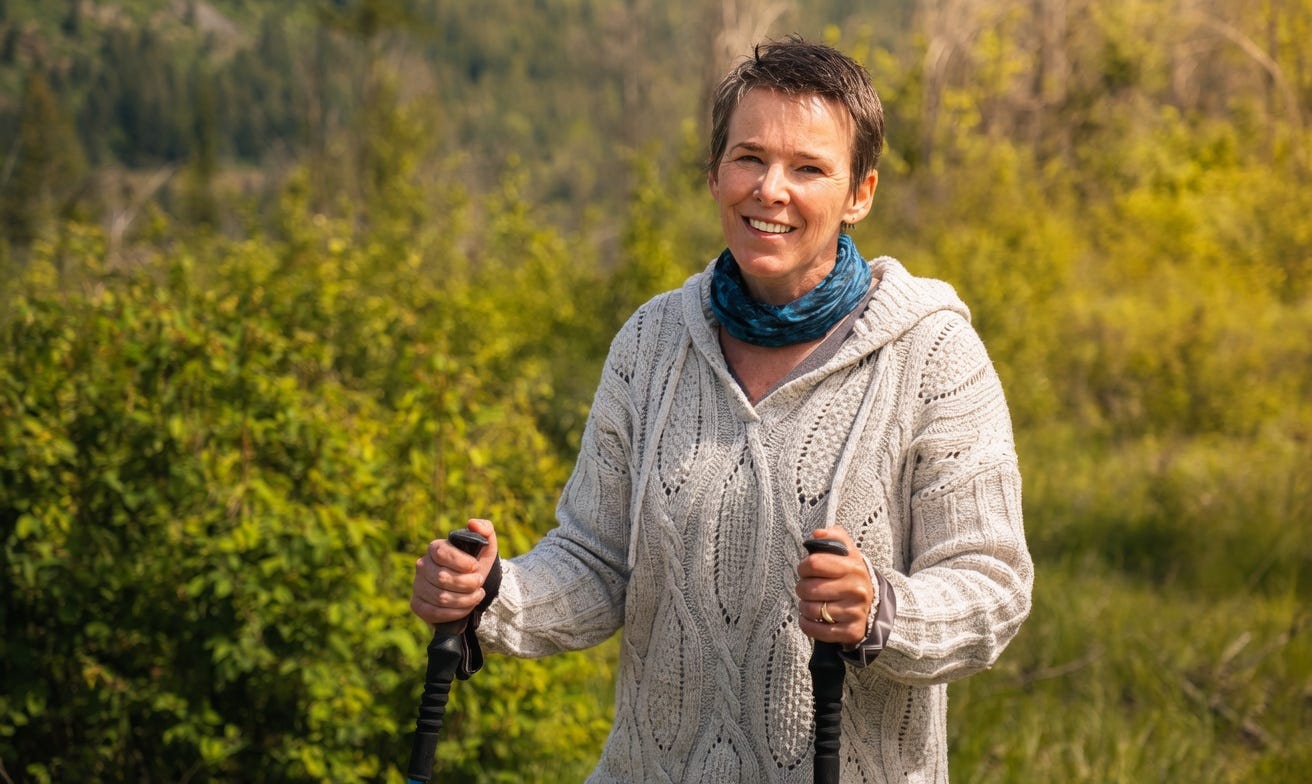
By 2025, I had no choice if I wanted to keep hiking the trails I love. The strain on my back had become too much. Ken bought me a pair of Kelly-green hiking poles for Christmas. One sleepless night, as the familiar dull pain woke me, I realized the poles weren’t going to solve everything. I decided I should lose some weight, too. I went online and purchased monthly GLP-1 injections.
The next morning, I logged in and canceled the order. I’m terrified of needles, and it just seemed like a bad idea. My weight wasn’t terrible. Instead, I started Pilates three times a week. The stretches helped. Then I added running and weight training. I became more disciplined with movement than I had been in years and even got certified to teach group fitness classes.
I’m now down to 130 pounds. I feel strong. I can see my abs again, and my back no longer aches at night. But when I hike, I still use the poles. Studies show that trekking poles transform a hike into a full-body workout, engaging the arms and core while increasing calorie burn without raising perceived exertion (Saunders et al., 2008).
Knowing the benefits didn’t stop me from turning to Ken this morning as I reached for my poles and asking, “Do my hiking sticks make me look old?”
He rolled his eyes, smiled, and tapped me on the tush with one of his own poles. “You look beautiful.”
I grinned as we walked out of the driveway, accompanied by the rhythmic click-clack of our rubber tips digging into the dirt.
What I’ve learned:
Trekking poles really do reduce back strain and make longer hikes more enjoyable.
Strength training and consistent movement in your 40s and 50s can be transformative.
Looking “old” is far better than not getting out on the trails at all.
Have you ever resisted a piece of hiking gear or a healthy habit, only to discover it made all the difference? I’d love to hear your story in the comments.
Saunders MJ, Hipp GR, Wenos DL, Deaton ML. Trekking poles increase physiological responses to hiking without increased perceived exertion. J Strength Cond Res. 2008 Sep;22(5):1468-74. doi: 10.1519/JSC.0b013e31817bd4e8. PMID: 18714242.
What part of northern Idaho are you in.?