

I danced with butterflies as a child, capering through grassy meadows among small Cabbage Whites that fluttered this way and that. I waved at great big orange-and-black Monarchs as they sailed past toward the pink flowers of nearby milkweed. On occasion, if I stopped, stood still, and was silent, one would briefly perch on my hand. The butterflies felt like friends, never too far out of reach.
That was then. This is now.
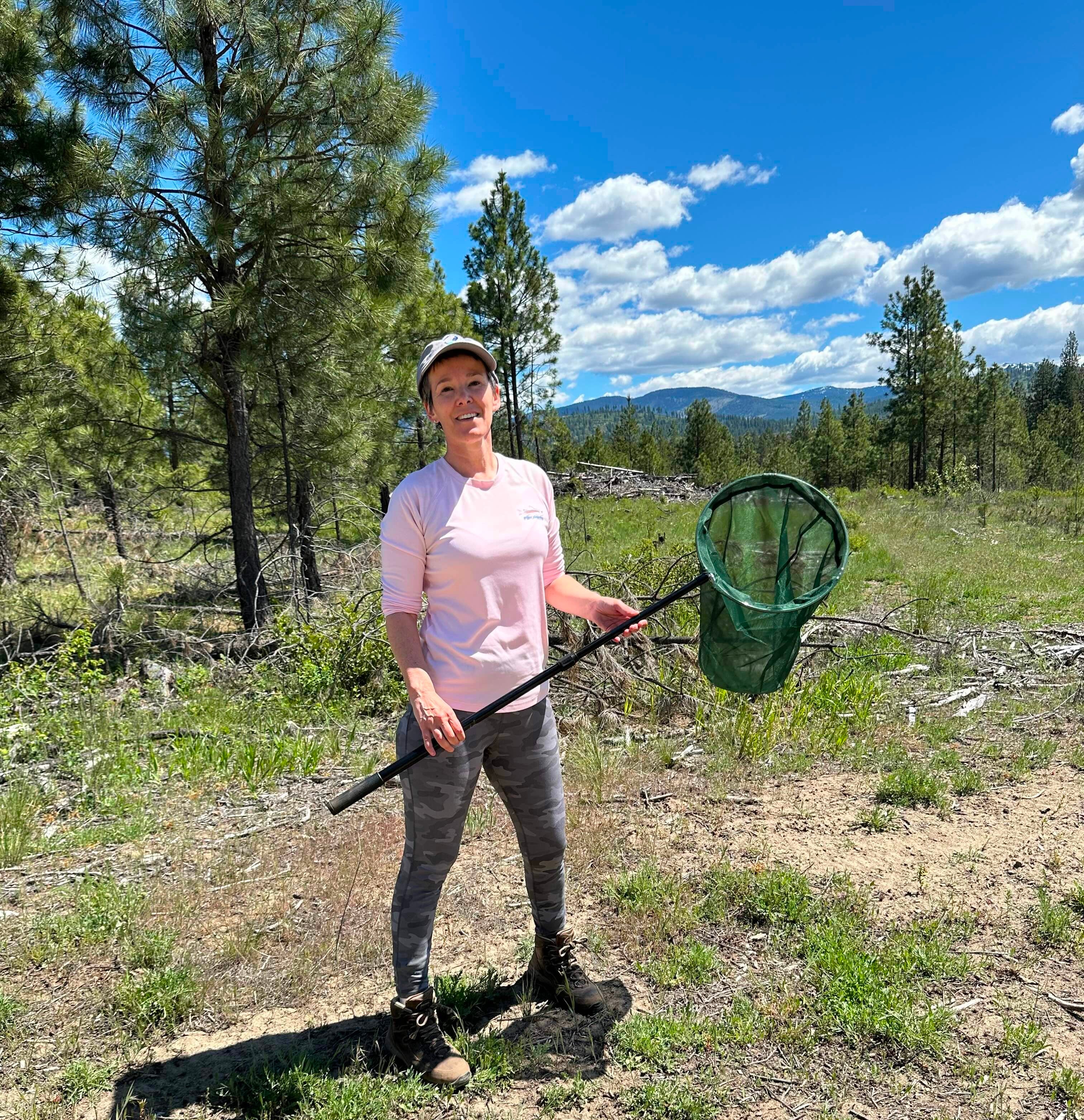
A day ago, I stood in a pine forest at Stampede Off-Road Vehicle (ORV) Park in Naples, Idaho, net in hand, chasing butterflies with limited success. I sprinted up hills, and through branch-littered grasslands after yellow swallowtails, blue coppers, and a small black butterfly I couldn’t immediately identify. I was sweaty, exhausted, and—as my husband laughingly pointed out—only caught about 30% of the ones I pursued.
Were butterflies always this fast?
I was hunting the flying insects as a volunteer for the Idaho Fish and Game (IDFG) Butterfly Atlas project, which tracks and documents butterfly species across the state. Butterflies are excellent indicators of ecosystem health—tiny canaries in the coal mine that can signal problems before they become obvious in larger animals.
The Monarch is the most famous example. They were once abundant in Idaho, with estimates ranging in the millions in the early 1990s. Since then, their numbers have plummeted. While multiple factors are involved—including habitat loss—the widespread introduction of neonicotinoid pesticides in the late 1990s has been particularly devastating for pollinators. These chemicals spread easily into groundwater and onto non-target plants.
In 2024, according to an IDFG report, Monarch sightings in the Panhandle were extremely rare. The impact ripples outward as well: raccoons, cats, owls, and snakes eat the birds, bats, and spiders that feed on the poisoned pollinators.
That, however, was not what I was thinking about as the fairy-like creatures darted away just out of reach. I was more worried about tripping over a log while running in heavy hiking boots and awkwardly swinging my net.
“I have to work on my agility training,” I panted to my husband.
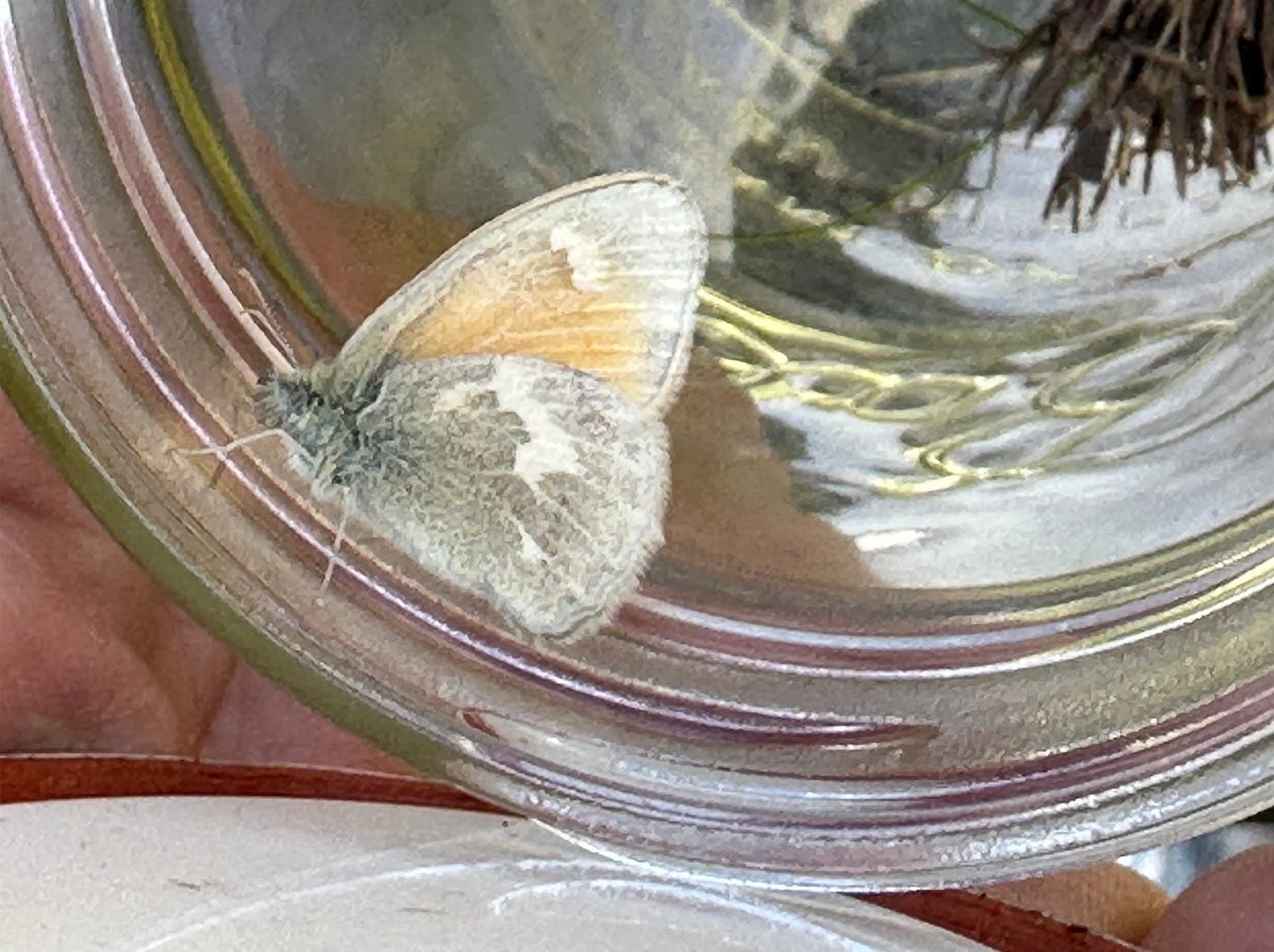
Still, I managed to capture, photograph, and release three butterflies without harming them (or myself). According to the eButterfly app, one was a Boisduval’s Blue with 96% confidence, and the other two were most likely Common Ringlets.
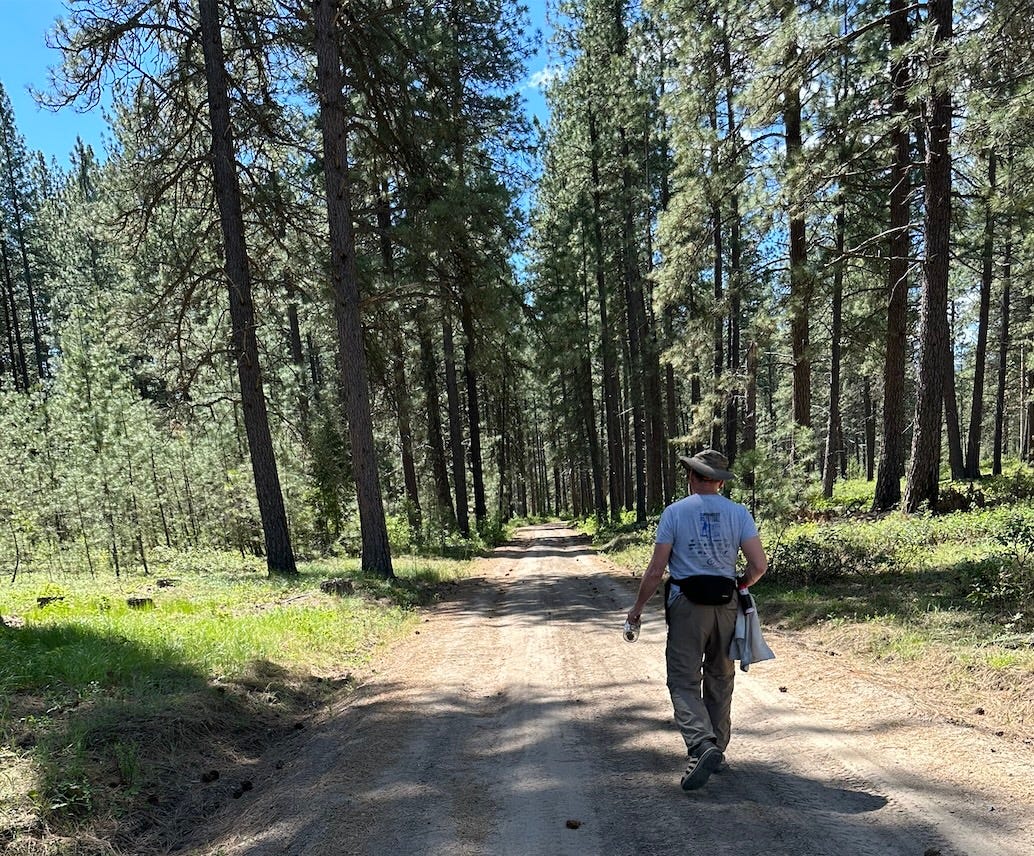
Aside from the butterflies, Stampede ORV Park proved to be a lovely spot. Despite its name (I assume there are days when it is filled with the screams of 2-stroke-engine motorcycles and teenagers atop ATVs), it was wonderfully quiet that day.
The rolling terrain, the 3.2-mile main loop trail, and several shorter connector trails (some closed to ORVs) made for a peaceful morning in nature. It even has a bathroom and space for kids to run around. If you’re in the Boundary County area and looking for a family-friendly outdoor spot, it’s worth a visit.
It served as a perfect warm-up for the bigger adventure ahead. In just a couple of weeks, I start my Hike Northern Idaho: 50 at 50 challenge. I’m celebrating turning 50 by completing 50 hikes starting on my birthday: June 11, 2026. I can’t wait to begin.
If you see butterflies this summer, consider downloading the free eButterfly app and contributing your own sightings to the Idaho Butterfly Atlas. And if you’d like to follow along on my hiking journey, I’d love to have you join me here on Hike Northern Idaho: 50 at 50.
test